
A First-Timer’s Guide to Visiting the Sahara: Merzouga vs Zagora
Planning your first trip to the Sahara and stuck choosing between Merzouga and Zagora? This first-timer’s guide breaks down the two most popular gateways to the Moroccan Sahara — the dunes, the driving distances, the cost, and the atmosphere — so you can pick the desert that fits your time, budget and sense of adventure.
The Sahara is the reason most people come to Morocco, and yet the single question we hear more than any other at Desert Sahara Life is simple: Merzouga or Zagora? Both sit at the edge of the great desert, both offer camel treks and nights under the stars, and both can be reached from Marrakech. But they are genuinely different experiences — different dunes, different drives, and a very different feeling once you arrive. Choosing well is the difference between a rushed photo stop and a trip you’ll talk about for years.
This guide is written for first-timers. We’ll compare the two head-to-head, explain who each one suits, and help you decide before you commit. If you’d rather have us tailor the whole thing around your dates, our Sahara trips planner tool is the fastest way to get a personalised route.
The Short AnswerMerzouga vs Zagora at a glance
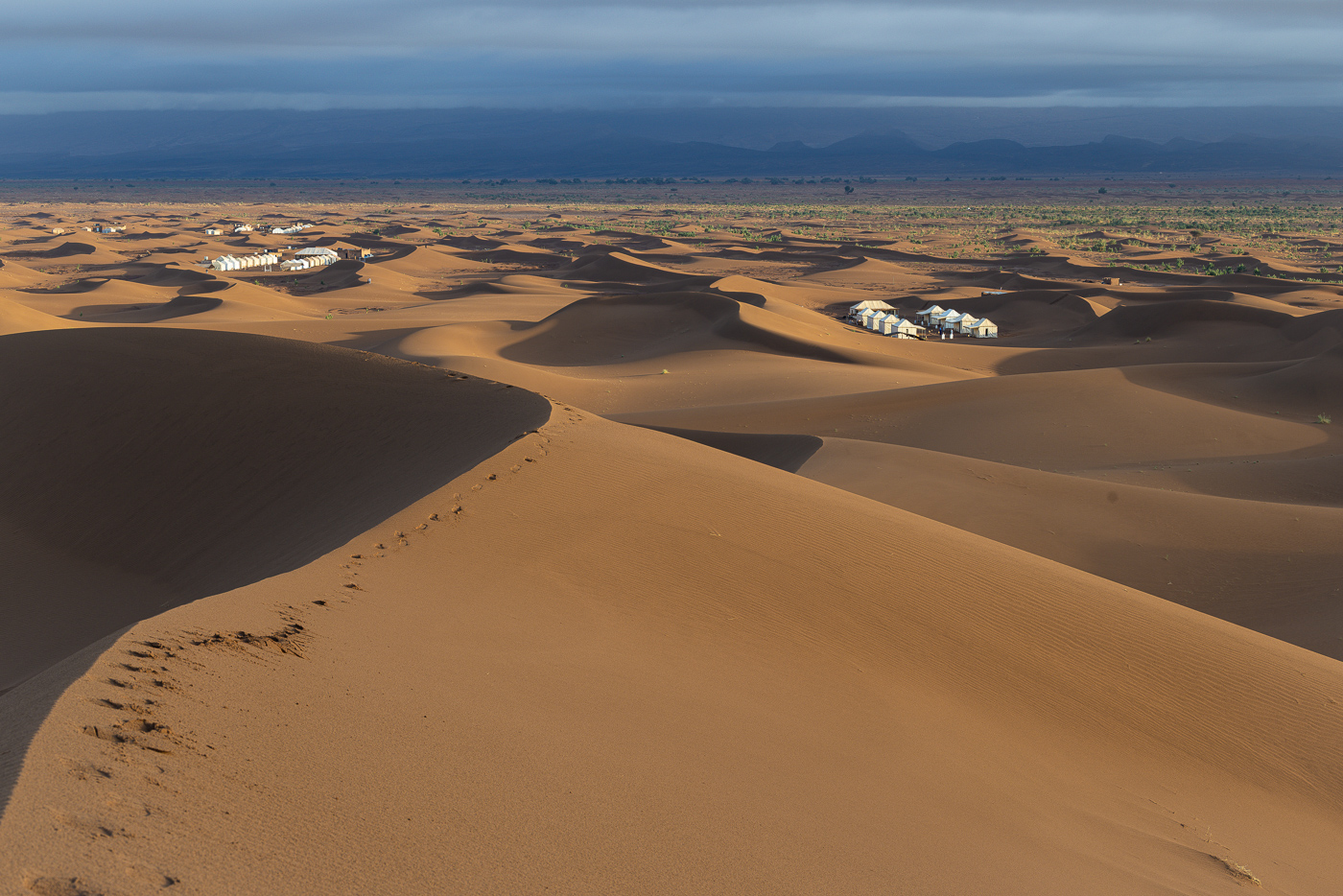
If you only remember one thing: Zagora is closer, Merzouga is more spectacular. Zagora’s dunes are modest and reachable in a long day’s drive from Marrakech, which makes it the classic choice for travellers on a tight two-day schedule. Merzouga is home to Erg Chebbi — towering, cinematic dunes that rise up to 150 metres — but it sits farther away, so you need at least three days to do it justice.
| Factor | Merzouga (Erg Chebbi) | Zagora |
|---|---|---|
| Drive from Marrakech | ~8–9 hours | ~6–7 hours |
| Dune height | Up to ~150 m — huge, classic Sahara | Low, scattered dunes |
| Minimum trip length | 3 days / 2 nights | 2 days / 1 night |
| Scenery | Iconic sea of orange sand | Rocky desert, palm groves, smaller dunes |
| Crowds | Busier, but dunes absorb it | Quieter overall |
| Best for | The “real” Sahara postcard | Short trips, limited time |
Option OneMerzouga & the dunes of Erg Chebbi
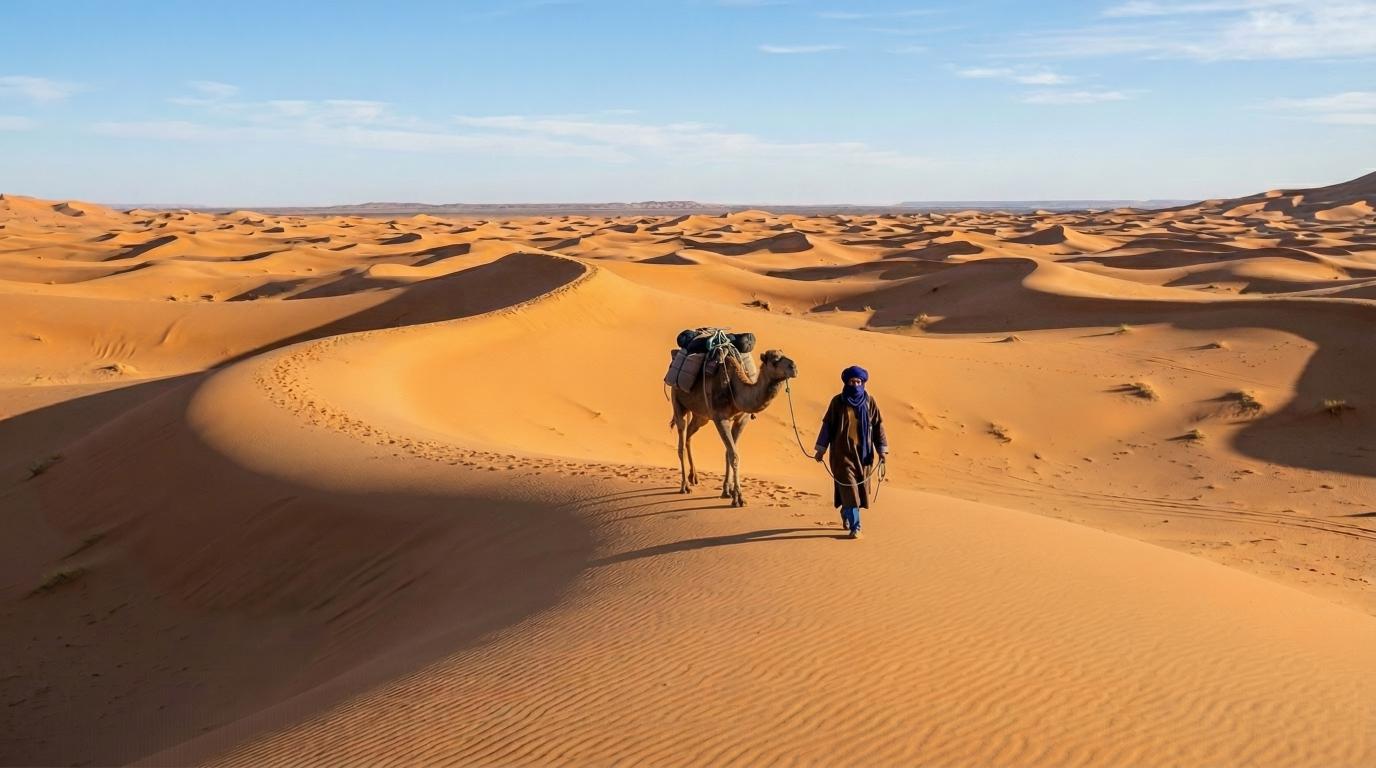
Merzouga is what most people picture when they imagine the Sahara. Erg Chebbi is a single, dramatic dune field stretching roughly 22 kilometres north to south and up to 5 kilometres wide, with crests high enough to leave you slightly breathless as you climb them at dawn. The sand glows from pale gold to deep amber depending on the hour, and the sunrise from a high dune is genuinely one of the great sights in Morocco.
Because Merzouga is farther from Marrakech, the smart way to visit is a three-day loop that lets the journey itself become part of the trip: the Tizi n’Tichka pass over the High Atlas, the UNESCO kasbah of Aït Benhaddou, the Dades or Todra gorges, and then the dunes. Rushing it into two days means a punishing amount of driving. If comfort matters to you, Merzouga is also where you’ll find the best accommodation — our Erg Chebbi luxury camps put you in private ensuite tents right in the dunes, a world away from a basic bivouac.
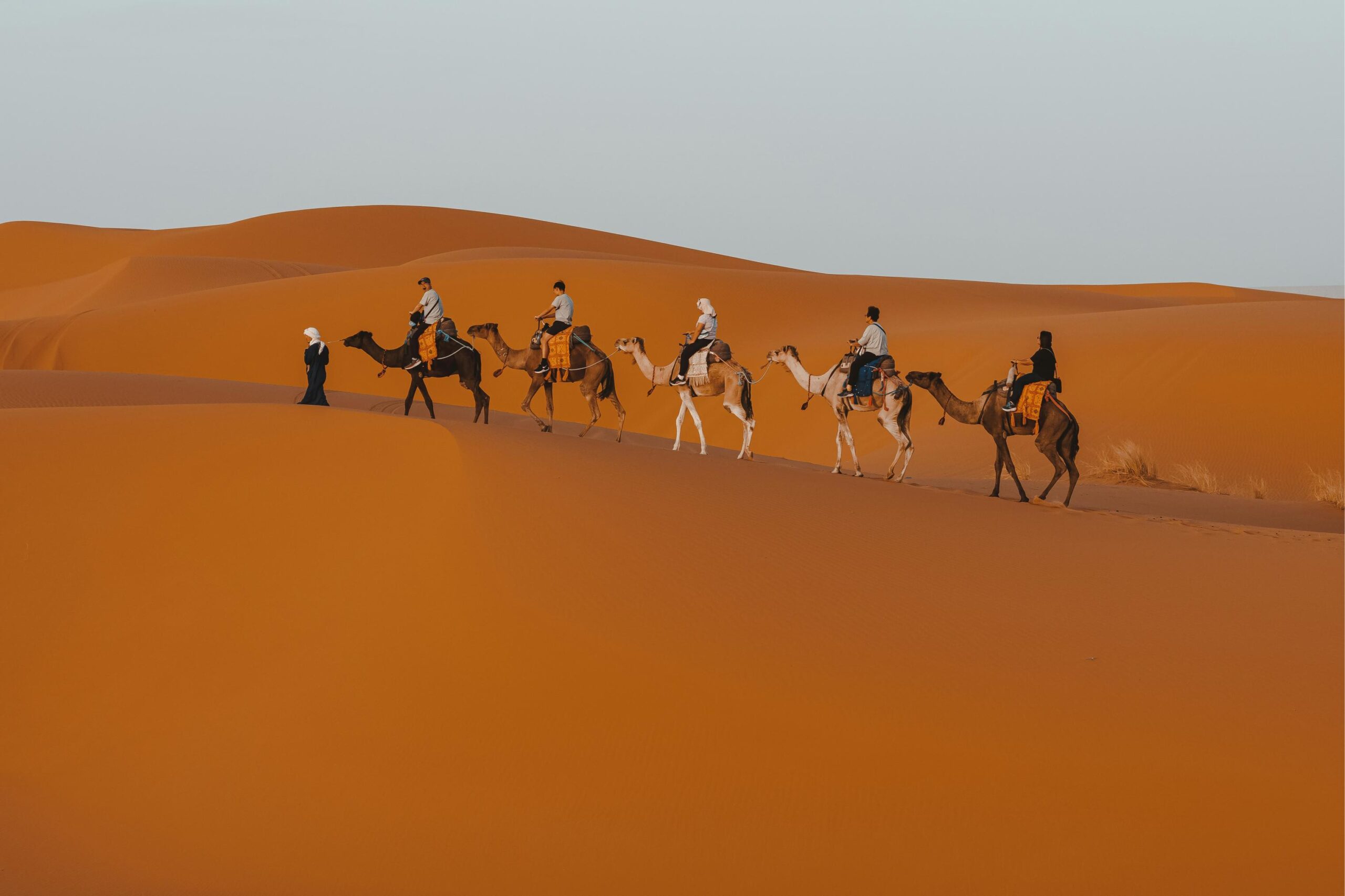
If your bucket-list image is a lone camel silhouette against a wall of orange sand, that photo is taken at Merzouga. Give it three days and you won’t regret the extra driving.
Option TwoZagora & the road less rushed
Zagora is the pragmatic choice. It sits at the end of the beautiful Draa Valley, a ribbon of date palms and old kasbahs, and it’s close enough to reach from Marrakech in a single (long) day. The famous painted sign — “Timbuktu, 52 days” by camel — captures Zagora’s identity as an old caravan crossroads rather than a dune spectacle.
Be honest with yourself about expectations here. Zagora’s dunes are small and scattered; you come for the journey, the palmeries, the Berber villages and the star-filled night, not for towering sand. For travellers with only 48 hours who still want to sleep in a desert camp and ride a camel at sunset, it delivers exactly that without the marathon drive. It’s also a gentle introduction if you’re travelling with older relatives or young children.
The Third OptionErg Chegaga — the wild card
Here’s the secret most guidebooks bury: if you want big dunes and genuine remoteness, look west to Erg Chegaga, reached via Mhamid at the very end of the paved road. Chegaga’s dunes rival Erg Chebbi in scale but see a fraction of the visitors, because getting there requires real 4×4 driving across open desert. It’s the answer for travellers who find Merzouga a touch too popular and Zagora a touch too tame.
You can reach it on a dedicated trip such as our Erg Chegaga tours from Marrakech, or go deeper with the multi-day Erg Chigaga tours that cross several dune systems on foot and by camel. For first-timers with a week to spare, this is often the most rewarding choice of all.
Not sure which desert is right for you?
Tell us your dates, budget and travel style and we’ll match you to the perfect route — Merzouga, Zagora or the wild dunes of Chegaga.
Start PlanningDecide In Two MinutesWhich Sahara gateway should you choose?
Run through these quick questions:
- Do you have only 2 days? Choose Zagora. It’s the only option that works well in a single overnight.
- Do you have 3+ days and want the iconic dunes? Choose Merzouga and Erg Chebbi.
- Do you have 4–7 days and crave remoteness? Choose Erg Chegaga.
- Travelling with kids or elderly parents? Zagora or a luxury camp at Merzouga.
- Chasing the best photography? Merzouga at sunrise, or Chegaga for empty dunes.
Before You BookPractical first-timer essentials
Whichever desert you pick, a few basics apply everywhere. Nights get cold — even in summer the temperature drops sharply after dark, so bring a warm layer. Days can be intense; a hat, sunglasses and high-factor sunscreen are non-negotiable. Loose, breathable clothing keeps you cool and doubles as sun protection. For camel treks specifically, we’ve put together a full guide on what to wear on a camel ride that’s worth a read before you pack.
Finally, choose an operator that runs small groups and knows the terrain. The Sahara rewards local knowledge — where to camp, when to leave, which route avoids the crowds. That’s exactly what we’ve been doing at Desert Sahara Life since 2010, and you can browse the full range on our Sahara tours page or reach out through our contact page with any question, however small.
The DriveGetting there, broken down
The road south is a big part of what makes a Sahara trip special, but it helps to know what you’re signing up for. From Marrakech, the route climbs the High Atlas over the Tizi n’Tichka pass — a switchback mountain road that recently underwent major upgrades — before descending into the pre-desert plateau. For Zagora, you’ll drive roughly six to seven hours, passing Ouarzazate and following the Draa Valley. For Merzouga, budget eight to nine hours, usually broken by stops at Aït Benhaddou and the Dades or Todra gorges.
This is precisely why we don’t recommend cramming Merzouga into two days: you’d spend almost the entire trip in a vehicle. Spreading the drive across a three-day loop turns the journey into a highlight reel of southern Morocco rather than an endurance test. Travellers short on time who still want big dunes often prefer heading west instead — the Erg Chegaga route from Marrakech can be tighter while still delivering serious sand.
BudgetingWhat a Sahara trip typically costs
Prices vary with trip length, group size and comfort level, but a few honest guidelines help you plan. A short shared Zagora overnight sits at the budget end; a three-day Merzouga trip with a quality camp costs more but delivers far more. Luxury camps and private departures carry a premium for the comfort and flexibility they offer. As a rule, be suspicious of the very cheapest deals — in the desert, rock-bottom prices usually mean cut corners on food, guides or animal welfare. Paying a fair rate keeps the experience good and the local economy healthy.
What matters most is understanding what’s included: transport, meals, camp type, guide, and any extras like camel riding. A transparent operator lists all of this clearly. If you’d like a tailored quote based on your exact dates and group, the quickest route is our Sahara trips planner tool.
What To ExpectA typical overnight in the dunes
If you’ve never done it, here’s the shape of a classic desert overnight. You arrive at the edge of the dunes in the late afternoon and transfer to your camp — on foot, by camel, or by 4×4 depending on the route. As the heat softens, you climb a nearby dune to watch the sunset paint the sand in shifting golds and pinks. Back at camp, dinner is a slow-cooked tagine shared under the open sky, often followed by drumming and stories around the fire. You sleep in a tent with proper bedding, wake before dawn, and climb back up for the sunrise — the moment that stays with almost everyone. Simple, timeless, and completely worth the effort of getting there.
Key takeaways
- Zagora = closest, best for 2-day trips, modest dunes.
- Merzouga = the iconic tall dunes of Erg Chebbi, needs 3+ days.
- Erg Chegaga = big dunes without the crowds, needs a 4×4 and more time.
- Pack warm layers, sun protection and breathable clothing whatever you choose.
Featured Sahara Trips
Sahara Desert Tours
Multi-day journeys from Marrakech and Fes into Erg Chegaga and Erg Chebbi.
View tours →Erg Chebbi Luxury Camps
Sleep in style near Merzouga with private tents, ensuite bathrooms and fire-lit dinners.
See camps →Merzouga vs Zagora — FAQs
Ready to See the Sahara?
Whether it’s the tall dunes of Merzouga or the quiet palmeries of Zagora, we’ll build the trip around you. Small groups, Berber guides, unforgettable nights.