
How to Book an Ethical Camel Trek in Morocco
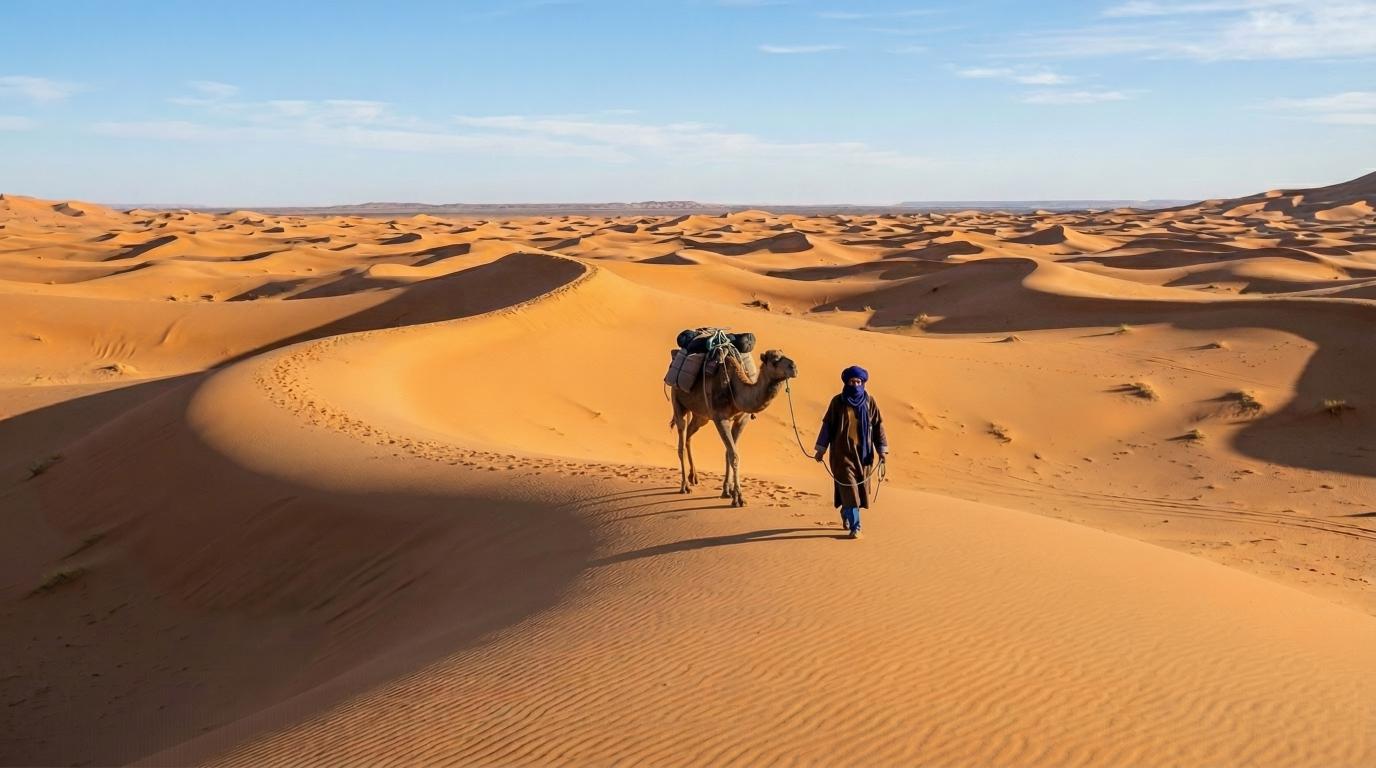
Booking an ethical camel trek in Morocco means putting animal welfare, fair pay and real Berber ownership at the centre of your trip — not as an afterthought. This guide shows you exactly what to look for, the questions to ask, and the red flags that separate a responsible desert experience from an exploitative one.
A camel trek across the Sahara is, for many travellers, the emotional heart of a trip to Morocco. But the rise of mass desert tourism has a shadow side: overworked animals, underpaid cameleers, and camps run by outside investors who send profits far from the desert communities that host you. Learning how to book an ethical camel trek in Morocco is the single most important thing you can do to make sure your adventure leaves the desert — and the people who call it home — better off.
At Desert Sahara Life, we’re a Berber-run operator working in our own home terrain, so these standards aren’t a marketing add-on for us — they’re how the desert has always worked. Here’s how to recognise the real thing.
Why It MattersThe ethics of camel tourism
Dromedary camels are working animals, and in the right hands they are treasured, well-fed and carefully managed — a family’s livelihood depends on their health. The problems appear when demand outstrips care: camels made to carry heavy adults back-to-back all day with no rest, animals kept on short tethers in the sun, or ill-fitting saddles that cause sores. An ethical trek is built around the animal’s limits, not the tour schedule’s.
The second half of the ethics equation is human. Ask yourself who actually benefits from your booking. Money spent with a genuinely local, Berber-owned operator circulates through desert villages — guides, cooks, camel owners, drivers. You can read about our own team and roots on our about page, and it’s a fair thing to ask of any operator you’re considering.
The ChecklistSeven signs of an ethical camel trek
Before you book, look for these markers of a responsible operator:
- Camels look healthy and calm. Clear eyes, good body weight, no visible sores, and handlers who speak to their animals rather than yank them.
- Short, humane riding times. Reputable treks keep rides to roughly one to two hours around sunrise and sunset, with the option to walk instead.
- Reasonable weight limits. One rider per camel, and heavier guests are respectfully offered a walking alternative.
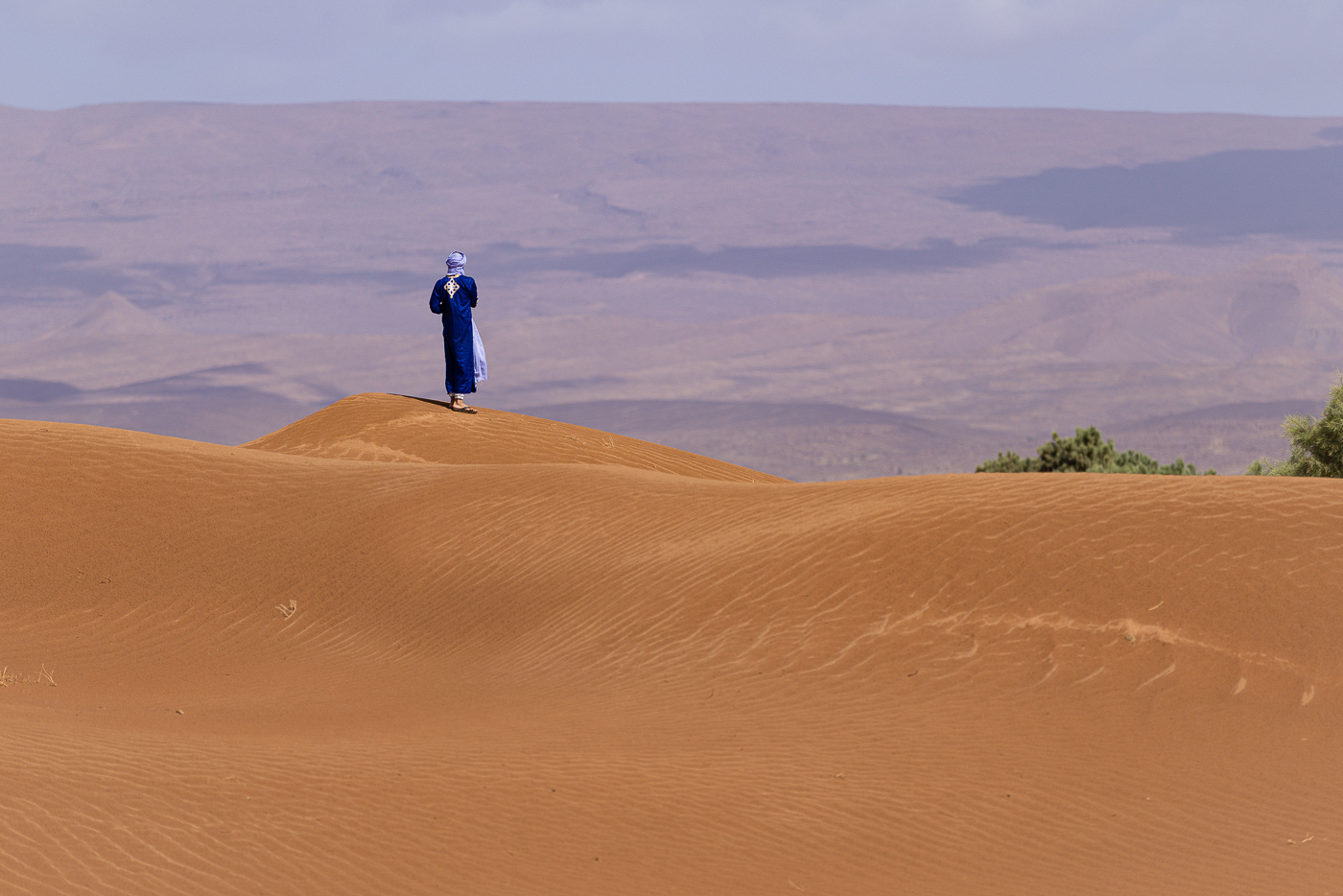
- Local, named guides. Real Berber cameleers who live in the region, not seasonal labour hired far from the desert.
- Small group sizes. Fewer people means better care for both animals and guests.
- Transparent pricing. An operator who can explain where your money goes has nothing to hide.
- Leave-no-trace camping. Waste carried out, fires managed, camps that respect the land.
“Who owns the camels and the camp, and how are your guides paid?” A confident, specific answer is one of the clearest signals of an ethical operator. Vague deflection is a red flag.
Red FlagsWhat to avoid
Just as important as the green flags are the warnings. Steer clear of operators who advertise all-day camel riding as a selling point, who pack large groups onto long single-file caravans purely for photos, or who can’t tell you anything about the guides and communities involved. Rock-bottom prices are often a red flag too — someone, or some animal, is absorbing that cost. If a deal seems impossibly cheap, the welfare corners have usually already been cut.
You should also be wary of “desert experiences” that are really just a photo stop: a five-minute camel ride, a rushed sunset, and back on the bus. That’s neither ethical nor memorable. A proper trek gives the animals rest, gives you time, and gives the desert space to work its quiet magic.
Beyond The CamelWalking is ethical too
One of the best-kept secrets of desert travel is that you don’t have to ride the whole way — and often shouldn’t. Many of our journeys are built around trekking on foot, with camels carrying only the gear and offering an optional ride when you want one. This spreads the load, respects the animals, and honestly gives you a deeper connection to the landscape. If you like the idea of covering ground on your own two feet, our hiking tours in Morocco and multi-day Sahara tours are designed exactly this way.
Book a trek that treats the desert right
Berber-owned, small groups, well-cared-for camels and camps that give back to local communities. Tell us what you’re looking for.
Talk to Our Team
Choosing Your OperatorLocal knowledge you can trust
The single most reliable path to an ethical trek is booking with an operator rooted in the desert itself. Being a registered Morocco travel agency with local ownership means accountability: the guides are our neighbours, the camel owners are people we’ve worked alongside for years, and our reputation lives and dies in the communities we serve. That accountability is worth far more than any certificate on a website.
If comfort is a priority and you still want to keep things responsible, our Erg Chebbi luxury camps show that ethical and comfortable aren’t opposites — you can have ensuite tents and fair, welfare-first operations at the same time.
Pack RightBe a considerate guest
Ethical travel is a two-way street. Dressing appropriately, respecting local customs, keeping your load light for the camels, and being patient with the desert’s slower rhythm all matter. Before you go, our guide on what to wear on a camel ride will help you turn up prepared, comfortable and respectful of the culture you’re stepping into.
Follow The MoneyFair pay and the local economy
Animal welfare gets most of the attention in conversations about ethical trekking, but human welfare is just as important — and often less visible. In the desert economy, a single trek supports a whole chain of people: the cameleer who owns and cares for the animals, the cook who prepares your meals, the guide who reads the terrain, and the driver who gets you to the sand. When you book through a genuinely local operator, those wages stay in the community. When you book through a distant reseller offering suspiciously low prices, someone in that chain is being squeezed.
This is why local ownership matters so much. As a registered, Berber-run Morocco travel agency, our accountability is personal — the people who make your trip happen are our neighbours and long-standing partners, not anonymous contractors. Fair pay isn’t a policy we advertise; it’s simply how the desert has always functioned when it’s run by the people who live in it.
Hour By HourWhat a day on an ethical trek looks like
A responsibly run trekking day has a rhythm built around both the traveller and the animals. You set out in the cool of early morning, often walking alongside the camels rather than riding constantly, so the load is shared and the pace stays humane. The heat of midday is spent resting in the shade of a tamarisk tree or palm, with a proper lunch and time to simply be still. Riding, when offered, is kept short and optional — a gentle stretch at sunrise or sunset rather than hours in the saddle. By evening you reach camp, the camels are unloaded, watered and left to rest, and the fire is lit. This is what “ethical” looks like in practice: a schedule that never pushes an animal past its limits to hit a tourist’s timetable.
The Bigger PictureWater, waste and respect for the land
Ethics in the desert go beyond camels. Water is precious out here, so responsible operators use it carefully and never waste it. Waste is another quiet test: a good camp packs out everything it brings in and leaves the dunes exactly as it found them. And there’s a cultural dimension too — the Sahara is home to nomadic families and sacred sites, and travelling through with respect for those communities is part of doing it right. When you choose an operator that treats the land and its people as partners rather than a backdrop, your trip becomes something the desert can sustain for the long term. You can explore how we build these values into every journey across our full range of Sahara tours, or start shaping your own responsible trip with our Sahara trips planner tool.
Look CloserEthical claims vs. reality
“Ethical,” “sustainable” and “responsible” are easy words to print on a website and harder to live by. Because there’s no single official certification for desert tourism in Morocco, the burden falls on you to look past the label. The good news is that the truth reveals itself quickly when you ask specific questions. An operator living up to their claims will happily tell you the group size, how long you’ll actually ride, who the guides are, and what happens to the camels between trips. Evasiveness on any of these is more telling than any badge or slogan.
Reviews help too, but read them for detail rather than star ratings — comments that mention the guides by name, describe the camels’ condition, or praise the food and the pace are far more useful than a generic five-star click. Trust the operators who are specific, transparent and rooted in the desert, and you’ll almost always end up with a trek that’s genuinely worth feeling good about.
Key takeaways
- Choose Berber-owned, local operators — ask who owns the camels and camps.
- Healthy, calm animals and short sunrise/sunset rides signal good welfare.
- Avoid all-day riding, huge caravans and suspiciously cheap prices.
- Walking treks are ethical, deeper, and easier on the camels.
Featured Sahara Trips
Sahara Desert Tours
Multi-day journeys from Marrakech and Fes into Erg Chegaga and Erg Chebbi.
View tours →Ethical Camel Trekking — FAQs
Trek the Sahara, the Right Way
Berber-owned, welfare-first, and rooted in the desert we call home. Let’s plan a camel trek you can feel good about.